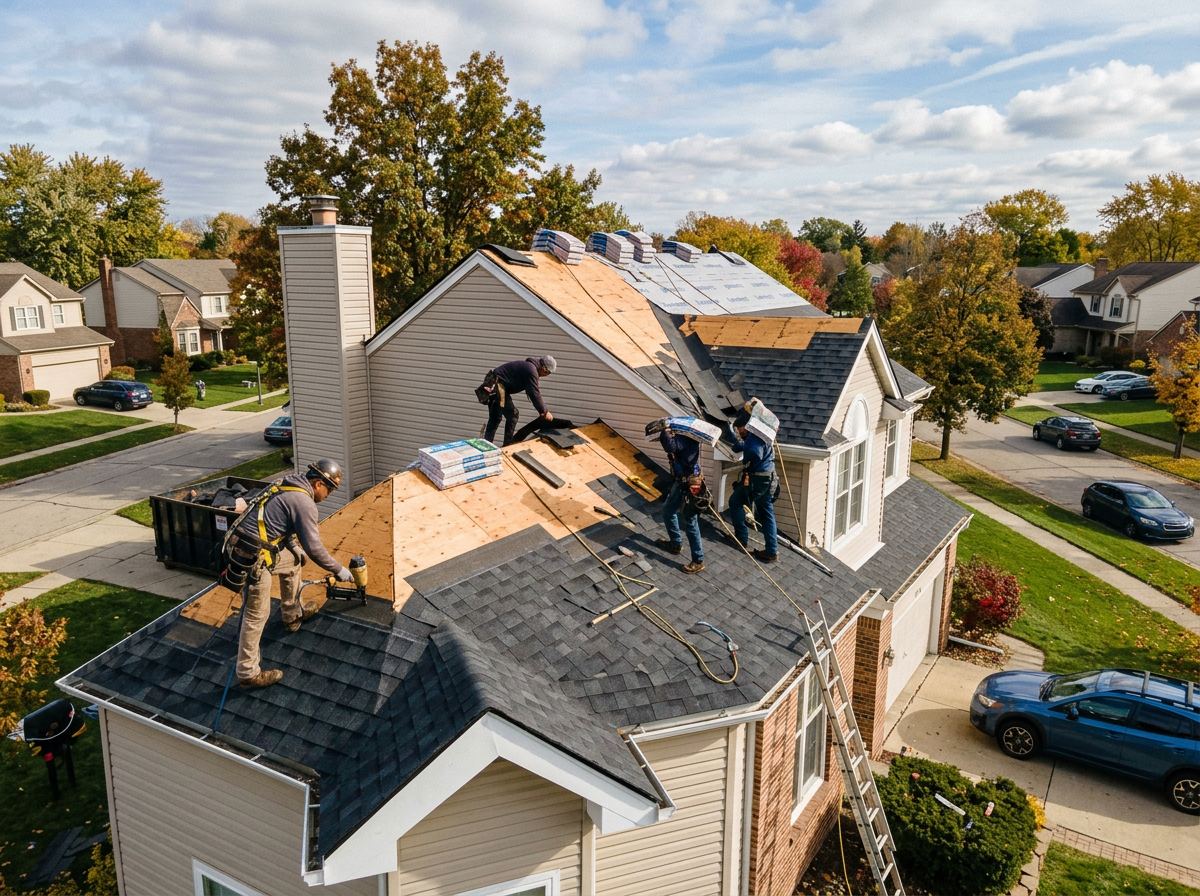
Troy homes from the 1960s through 1990s along Rochester Road Corridor and near Somerset often carry second or third asphalt roofs that show granule loss, curling edges, and cracked step flashing after decades of humid continental winters. Mature trees drop limbs that dent shingles while freeze-thaw cycles push water under valleys and around pipe boots, creating leaks that reach the decking. Wind-driven rain and occasional hail accelerate wear on south-facing slopes and ridge lines, especially in subdivisions where HOA rules limit visible repairs.
We begin every job with a deck-level inspection that checks for soft plywood, rotted fascia, and failed underlayment before any tear-off starts. Once the old shingles and layers are removed we install ice and water shield along eaves, valleys, and around all penetrations, add drip edge, then lay new architectural shingles with proper nailing patterns and ridge vent tied into existing soffit intake. Flashing is replaced at every wall, chimney, and skylight to match the existing roof planes.
Subdivision layouts near Big Beaver and Oakland Mall create tight access and shared property lines that require careful debris containment and neighbor coordination during tear-off. Many Troy colonials and ranches have low-pitch sections or additions that need extra underlayment and modified bitumen in the valleys. We work around existing gutters and downspouts, preserving them where possible while ensuring new shingles tie cleanly into the drip edge.
Technician insight
In Troy, the thing that catches most people out with Asphalt Shingle Roof Replacement is hidden deck rot along the north eaves of 1970s colonials near the Troy Historic Village. Ice dams from repeated freeze-thaw cycles push water under old felt and rot the plywood before homeowners notice interior stains. Once we tear off we often find the first three feet of decking needs replacement even when the shingles still look salvageable from the street.
Ice Dam Leak on 1978 Colonial Near Somerset
Water stains appeared in the upstairs hallway after a January thaw. Tear-off revealed rotted decking and failed underlayment along the north valley where mature trees blocked sun. We replaced the damaged plywood, installed full ice and water shield, and tied new architectural shingles into the existing ridge vent. No further leaks occurred the following winter.
Asphalt Shingle Roof Replacement Services We Offer
✓Full Tear-Off Replacement
Remove all existing layers down to the decking so new underlayment and shingles sit flat without telegraphing old damage.
✓Architectural Shingle Upgrade
Replace standard three-tab with thicker architectural shingles that better resist Troy wind and hail while improving curb appeal on ranch and colonial homes.
✓Ice and Water Shield Installation
Apply self-adhering membrane along eaves, valleys, and penetrations to stop ice dam leaks common after Troy freeze-thaw cycles.
✓Ridge Vent and Soffit Intake Upgrade
Add or replace ridge vent and ensure matching soffit intake to reduce attic moisture and ice dam risk on 1970s-1980s homes.
✓Decking Repair During Replacement
Replace damaged plywood or OSB discovered after tear-off so the new roof has a solid, dry base before shingles go down.
How it works
- 1
Site Inspection
Walk the roof and attic to map leaks, check deck condition, and note existing ventilation, flashing, and HOA-visible details.
- 2
Tear-Off and Deck Prep
Remove all shingles and underlayment, haul debris, then repair or replace damaged decking and install new drip edge.
- 3
Underlayment and Flashing
Roll out ice and water shield at eaves and valleys, replace step flashing, pipe boots, and valley metal before shingle courses begin.
- 4
Shingle Installation and Ventilation
Lay architectural shingles, cut and seal ridge vent, tie in soffit intake, and clean up all materials from the property.