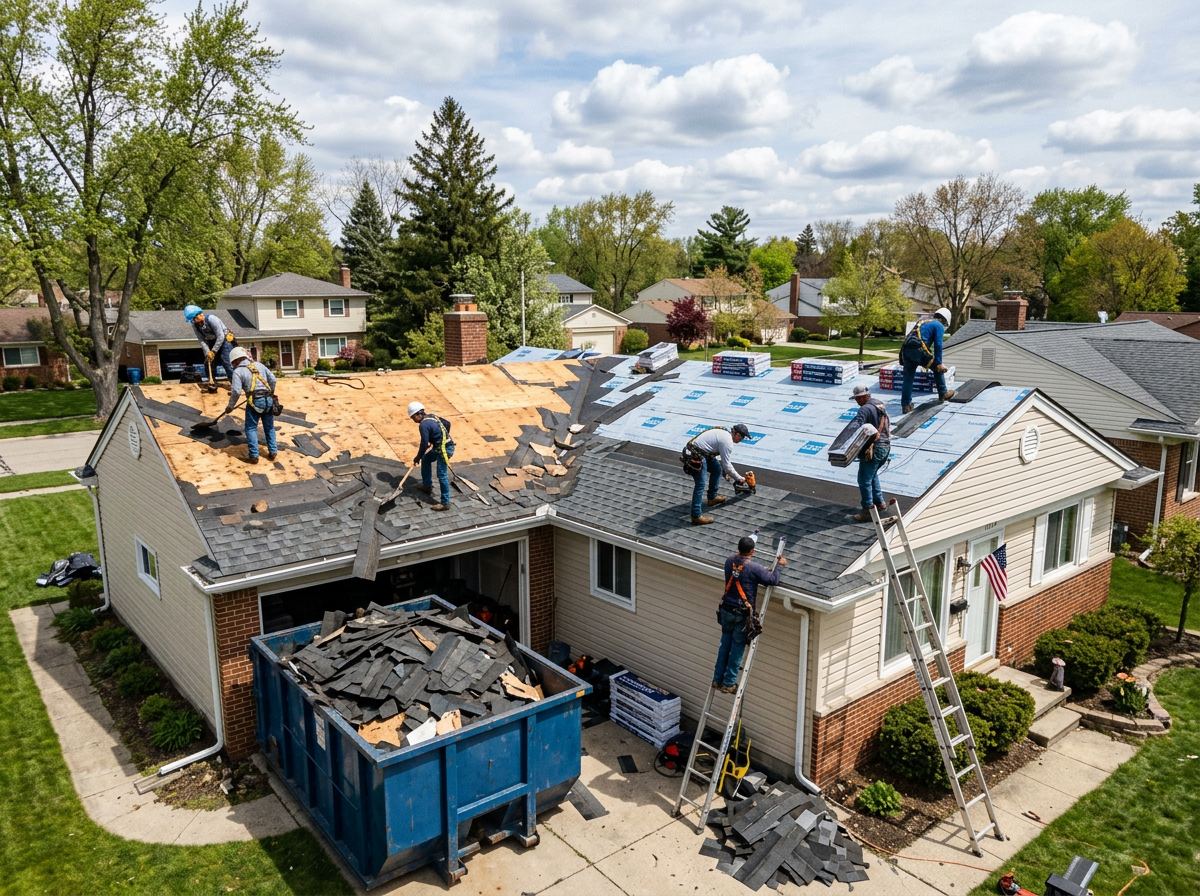
Troy homes built between the 1960s and 1990s along the Rochester Road Corridor and near Somerset often carry second or third asphalt roofs that now show granule loss, curling shingles, and failed step flashing around valleys. Mature trees drop limbs that dent decking, while the humid continental winters create repeated freeze-thaw cycles that push water under old shingles and create ice dams along eaves. Homeowners in subdivisions with HOA rules must also keep rooflines consistent, so any replacement must match existing architectural profiles without adding visible ridges or mismatched colors.
We begin every job with a deck inspection after complete tear-off, checking for soft spots, rotted plywood, and water stains around pipe boots and ridge areas. New ice and water shield goes down at eaves and valleys, followed by synthetic underlayment across the field, drip edge on all perimeters, and architectural shingles chosen for wind resistance. Ridge vent and soffit intake are balanced to reduce attic moisture, and we flash skylights and chimneys with step flashing tucked under each course rather than surface-mounted pieces that leak after the next thaw.
Wind and hail events common in southeast Oakland County loosen granules and crack brittle shingles on exposed south-facing slopes, while north slopes collect snow that melts and refreezes behind gutters. In neighborhoods near Troy Historic Village and Oakland Mall, tight lot lines and shared driveways require careful debris removal so tear-off scraps do not damage neighboring landscaping. We coordinate with local disposal rules and return the site broom-clean each evening so residents can move through their routines without roof debris in the yard.
Technician insight
In Troy, the thing that catches most people out with Tear-Off and Re-Roof is hidden plywood rot along the north eaves of 1970s colonials where repeated ice dams have wicked water under the second roof layer for years; once we strip it you see the damage runs farther than the stain marks suggested and the job grows before we even start shingling.
Rochester Road Colonial Ice Dam Repair
A 1978 colonial near the Rochester Road Corridor showed repeated winter leaks at the front dormer. Tear-off revealed rotted decking and failed step flashing where two earlier roofs had been layered. We replaced the damaged plywood, installed ice and water shield through the valley, and laid new architectural shingles with proper flashing. The homeowner reported no further leaks after the next freeze-thaw cycle.
Tear-Off and Re-Roof Services We Offer
✓Complete Tear-Off and Disposal
Removes every layer of existing shingles down to the deck so new materials sit flat and inspectors can see the true condition of the plywood before any underlayment goes down.
✓Ice and Water Shield Installation
Applies self-adhering membrane along eaves, valleys, and penetrations to stop water that backs up behind ice dams common on Troy roofs during January and February thaws.
✓Architectural Shingle Re-Roof
Installs heavier laminated shingles with deeper shadow lines that resist wind uplift on exposed ridges near Big Beaver and hold up better under hail than three-tab products.
✓Decking Repair During Tear-Off
Replaces soft or rotted sections of plywood discovered once the old roof is removed, preventing new shingles from telegraphing dips or failing prematurely.
✓Ridge Vent and Soffit Intake Upgrade
Balances airflow by adding continuous ridge vent and clearing or replacing clogged soffit vents so attic temperatures stay even and ice dams form less often.
How it works
- 1
Site Walk And Deck Assessment
We examine every slope, note existing layers, check attic ventilation, and mark any soft spots so the crew knows exactly what will be replaced once tear-off begins.
- 2
Full Tear-Off To Deck
- 3
Repairs And Underlayment
Damaged decking is replaced, ice and water shield is applied at eaves and valleys, then synthetic underlayment covers the field with drip edge installed on all edges.
- 4
Shingle Installation And Final Detail
Architectural shingles are laid with proper offset, step flashing is tucked at walls, pipe boots are sealed, and ridge vent is capped before gutters are cleared of debris.