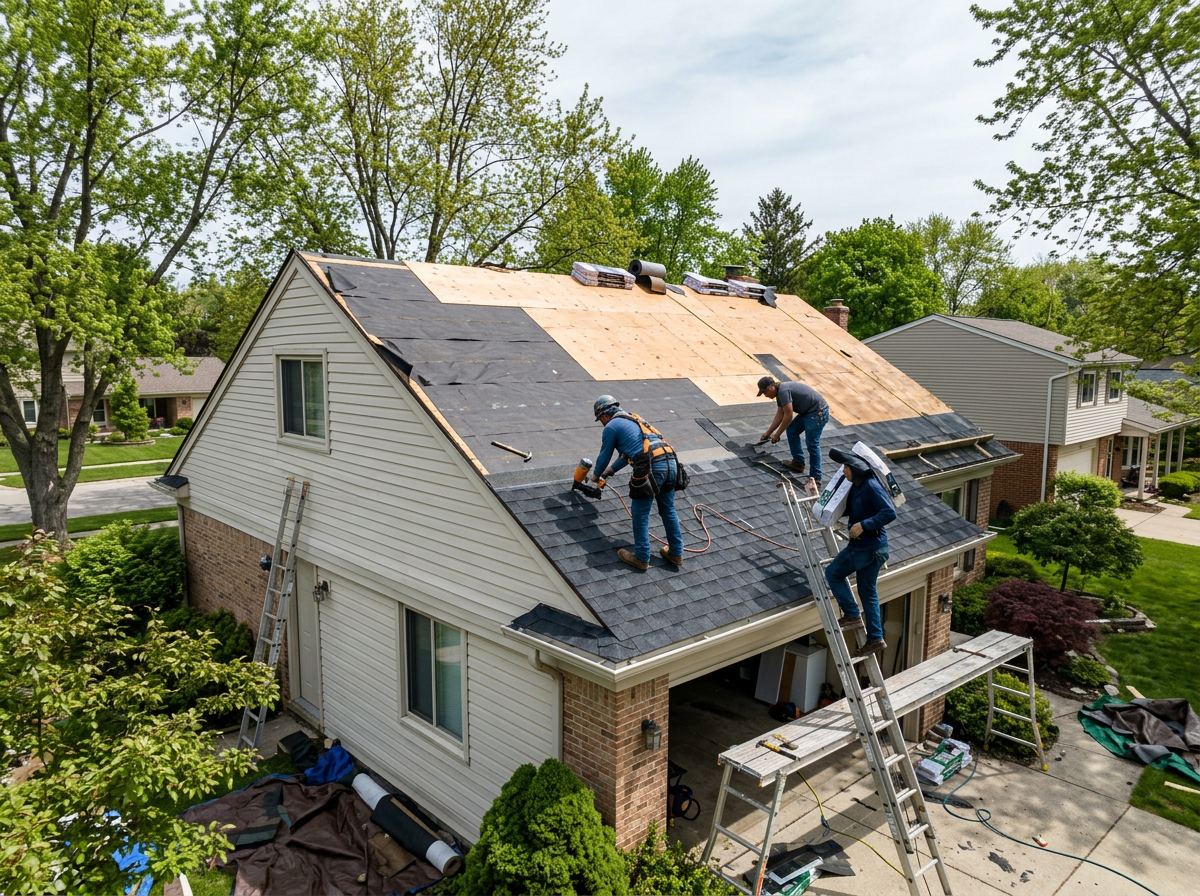
Troy homes built between the 1960s and 1990s along Big Beaver and Rochester Road Corridor often carry second or third asphalt roofs that show curling shingles and granule loss after decades of humid continental winters. Freeze-thaw cycles lift water under step flashing and valleys while mature trees drop debris that blocks soffit intake and ridge vent airflow. Ice dams form along eaves near Oakland Mall and Troy Historic Village, forcing moisture into decking and prompting full tear-off rather than overlay work.
We begin every roof replacement with a deck inspection that checks for soft spots, rotted plywood, and compromised underlayment before any tear-off begins. Once layers are removed we install ice and water shield in all valleys and along eaves, add drip edge, and fit new pipe boots and step flashing around penetrations. Architectural shingles go down with proper nailing patterns, followed by ridge vent tied into existing soffit intake to handle Troy wind loads and summer humidity.
Subdivision rules in areas near Somerset and Birmingham require matching existing profiles and colors, so we match shingle profiles to neighboring colonials and ranches while maintaining HOA compliance. Wind-driven rain and hail common in southeast Oakland County make modified bitumen and EPDM details at low-slope transitions essential. Every completed roof receives a final walkthrough that verifies granule coverage, flashing seals, and gutter alignment before we leave the site.
Technician insight
In Troy the thing that catches most people out with roof replacement is hidden rot under the second layer on 1970s colonials near Downtown Troy where mature trees keep gutters packed with leaves. Ice dams push water sideways under the shingles during the first hard freeze and the damage only shows up once the old roof comes off. Checking the deck thoroughly before tear-off prevents surprises that change the whole job.
Rochester Road Colonial Ice Dam Damage
A 1978 colonial near Rochester Road showed repeated winter leaks. Tear-off revealed rotted decking and failed underlayment along the north eaves where ice dams had formed for years. We replaced the damaged deck sections, installed new ice and water shield across the full eave line, and tied the ridge vent into cleared soffits. The new roof passed its first freeze-thaw cycle without moisture entry.
Roof Replacement Services We Offer
✓Full Roof Tear-Off
Removes every existing layer down to decking so new underlayment and ice and water shield sit flat without telegraphing old seams.
✓Architectural Shingle Replacement
Upgrades to thicker architectural shingles that resist curling and granule loss better in freeze-thaw conditions common along the Rochester Road Corridor.
✓Ice and Water Shield Installation
Applies self-adhering membrane along eaves, valleys, and penetrations to stop ice dam leaks that form during Troy winters.
✓Ridge Vent and Soffit Intake Upgrade
Balances airflow through ridge vent and soffit intake to reduce heat buildup and moisture that shortens shingle life on 1970s ranches.
✓Valley and Step Flashing Replacement
Replaces corroded or lifted flashing at roof intersections to prevent wind-driven rain from reaching decking on homes near Somerset Collection.
How it works
- 1
Deck Inspection
We walk the roof and attic to locate soft decking, rotted areas, and existing layer count before any work starts.
- 2
Complete Tear-Off
All shingles, underlayment, and flashing are removed down to the deck so new materials sit on a clean, inspectable surface.
- 3
Underlayment and Flashing
Ice and water shield goes down at eaves and valleys, drip edge is installed, and step flashing is fitted around every penetration.
- 4
Shingle Installation and Ventilation
Architectural shingles are laid with ridge vent and soffit intake tied together for proper airflow before final cleanup.